Wicked Science Programs
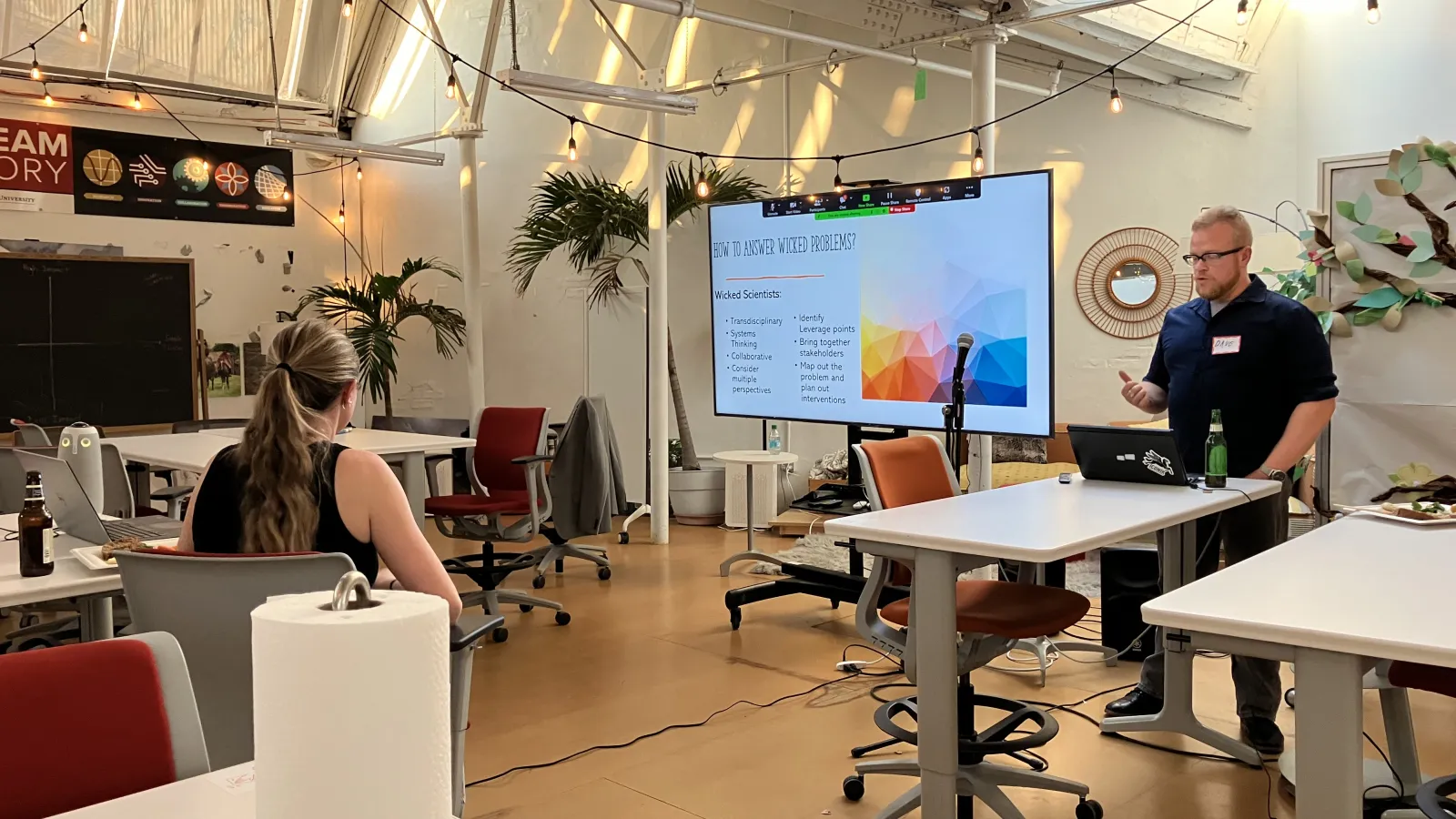
The Graduate Interdisciplinary Specialization (GIS) and the Undergraduate Certificate in Wicked Science train students to become wicked scientists who can tackle present and future grand challenges.
Academics
-
Undergraduate Studies
The Wicked Science Undergraduate Certificate is a groundbreaking interdisciplinary program designed to equip students with the skills and knowledge to tackle complex and real-world challenges.
-
Graduate Studies
The Ohio State University stands out with its Graduate Interdisciplinary Specialization (GIS) in Wicked Science, a pioneering program open to all students campus-wide.
Overview
The concept of wicked problem describes a wide range of global challenges including climate change, food security, growing inequality, cyber security, and emerging infectious diseases.
Wicked problem's two fundamental properties:
- They're dynamic, complex systems with many interdependencies
- Stakeholders have different values, interests and conceptions of the problem and its solution
Can We Solve Wicked Problems?
Because wicked problems are complex and political, it is impossible to “solve” them.
Because the most pressing problems in the world are wicked problems, it's not enough for students to be experts in their chosen fields.
They also need the necessary skills to collaborate effectively with diverse teams of researchers and stakeholders.
The need for students with both deep disciplinary training and the transdisciplinary soft skills to tackle wicked problems has been identified in numerous reports from the National Science Foundation, National Academies of Sciences, Council of Graduate Schools, and organizations like Google.
Goals of the Program
The goal of the Graduate Interdisciplinary Specialization (GIS) and the Undergraduate Certificate in Wicked Science is to train students to be able to do the following:
- Tackle wicked problems using a systems-thinking approach that seriously considers the roles, interests, and perspectives of stakeholders
- Collaborate effectively with stakeholders and team members from diverse backgrounds and experiences
- Communicate scientific research and ideas to diverse audiences and through different modalities
- Meet ethical, collegial, and professional expectations and standards in collaborative research and other professional endeavors
- Articulate a sense of purpose and develop competencies, skills, and habits that prepare them for life-long learning about and engaging with wicked problems
The training program is open to all students (undergraduate, graduate, and professional) across the university.
Students in programs from Anthropology to Veterinary Medicine are researching smaller and larger challenges that can be studied as wicked problems, but none of these programs trains students in the skills that are necessary to work effectively in inclusive, transdisciplinary teams, which is necessary to tackle wicked problems.
This program prepares students for a wide range of careers in and outside of academia.